Cooling Wet Pack: Instructions & Safety
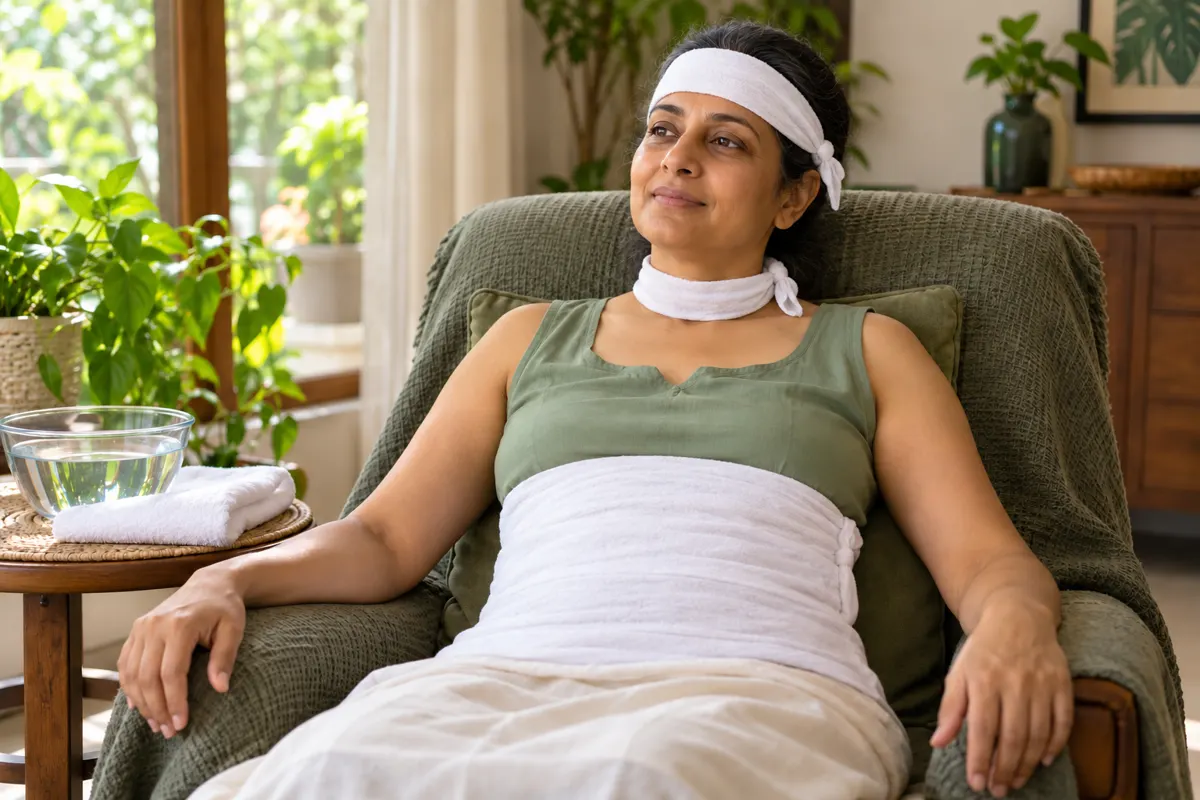
A traditional naturopathy practice using damp cotton cloths on the abdomen, forehead, and neck. Use it as an optional cooling comfort practice.
What about detoxification?
Scientific evidence does not establish that wet packs remove toxins or detoxify the body. Your liver and kidneys carry out the body's natural waste-processing and elimination functions. This practice does not replace medical care.
What you need
- One broad, clean cotton strip for the abdomen.
- Two narrower, clean cotton strips for the forehead and neck.
- A bowl of cool, room-temperature water and a dry towel.
How to apply
- Prepare the cloths: Dip them in cool, room-temperature water. Avoid ice-cold water. Gently squeeze out excess water so they are damp rather than dripping.
- Abdomen: Wrap one broad strip fully around the entire tummy and back, directly against the abdominal skin, covering above and below the navel in one continuous band. Tuck or tie the ends at the side, comfortably without compression.
- Forehead: Wrap one narrow strip around the head at forehead level and tie the ends comfortably at the side or back, keeping the eyes and nose clear.
- Neck: Wrap the other narrow strip loosely around the neck and secure the ends with a loose tie at the side. Do not tighten, compress, or restrict breathing or swallowing.
- Rest comfortably: Remain awake and check how you feel. Wellcure describes a 30–40-minute application; this is its traditional protocol, not a medically established treatment duration. Remove the cloths sooner whenever you wish or if you feel uncomfortable.
- Finish: Remove the packs, dry your skin, and wash and fully dry the cloths before reuse.
Safety and comfort
- Remove the packs immediately if you feel chilled, shivery, dizzy, numb, or uncomfortable, or notice skin irritation.
- Keep all wraps loose. Do not sleep while wearing them or use them on broken or irritated skin.
- If you have reduced skin sensation or poor circulation, ask your clinician before using cooling treatments.
- Seek medical assessment for persistent or unexplained pain rather than relying on a wet pack.
Frequency: There is no established evidence-based wet-pack schedule for detoxification. More frequent or longer use has no proven detox benefit.
Sources & further reading
- Wellcure: How to Use Wet Packs for Healing & Pain Relief — source for the traditional application method; its healing and detox claims are not established medical benefits.
- NIH / NCCIH: “Detoxes” and “Cleanses”: What You Need to Know
- MD Anderson: Detoxes, cleanses and fasts—what you should know